Showing posts with label chemistry. Show all posts

Wednesday, October 7, 2009

Coffee contains – gasp! – CHEMICALS!!!!!!

Ever wonder just what is in a cup of coffee? At first, you might not want to.

coffeePhoto source: Simone♠13

On the short list, in addition to caffeine, your average brew also contains:

  • Dimethyl disulfide, which contributes to the odour of human waste
  • 2-Ethylphenol, a cockroach pheromone
  • Putrescine, a toxic breakdown product of rancid meat 

While I don’t believe the article writer set out to have this effect, a couple comments indicate he has in fact scared some readers. Of course, it all depends on how you want to take it. Some might be made uneasy at the mention of strange-sounding chemicals with scary qualifiers, and opt to eschew their coffee tomorrow morning. I, however am not about to abandon my sweet, caffeinated nectar of the gods morning cup just yet.

Coffee’s been around for a while now, and (debates about small effects on overall health aside) it’s safe to say that the compounds in coffee, especially at cup-a-day levels, are harmless. This presentation of facts is a good illustration that one shouldn’t be scared of something just because it has chemical names attached to it. The unknown is scary and chemicals particularly intimidating, but any everyday material could be made to sound scarier if placed in the right light.

That cup your coffee’s in? Aluminum and silicon oxides
The table it’s sitting on? Reducing sugar polymers and lignins
The spoon you mixed with? Smelted iron-carbon alloy

You don’t even want to know what sort of nasty phytochemicals are in that banana you were about to eat.

The point being, just because you can name something chemically (and even describe potentially unsavoury places it might be found in nature or industry), that doesn’t make it bad for you. When someone says that a product contains (cue spooky music) chemicals, that person is trying to scare you, usually to buy their product. Case in point:

Note that they never say those chemicals are not present in their product (they are), just that they are present in the competitors. Sneaky bastards.

Anyways, that said, I’m thirsty. I’m off to grab a nice cold glass of dihydrogen monoxide.

Source:
Wired Science: What’s Inside a Cup of Coffee?

Monday, August 31, 2009

DNA Nanotechnology

In recent years the term “DNA” has become a bit of a buzzword in pop culture, thanks in part to several well-written and researched science fiction shows, and also some that aren’t. The use of the term has come to the point that I often find myself wincing at its use whenever it pops up outside the realm of science, and even sometimes within it. Often when someone should say “gene” or “genome” they instead say “DNA”, which ends up confusing the terminology, and ends up mystifying what DNA actually is, making it seem as if scientists don’t know what the chemical actually does or looks like.

Scientists often say that DNA is a blueprint for life. Not quite. The genome is the blueprint for life (all of the information), a gene is a single sketch, and DNA is the substrate (blueprint paper) on which it is drawn.

If this is the case, new technologies involving DNA turn this on its head and instead of following the blueprint, instead use the properties of this “blueprint paper” to construct new constructions, particles and nano-machines.

nanodna6
Source: Science/AAAS, via Wired 

So where am I going with this? Well, my aversion to the term DNA except in actual scientific journals means that I greet articles that plug DNA technology revolutionizing a field with an extreme degree of skepticism. Turns out for once those preaching the merits of DNA are on to something.

The same properties that make DNA such a good encoding molecule for biological information also makes it a great candidate for creating machines on the nano-scale. What’s more, 40 years of research in molecular biology has given us many of the tools to manufacture and manipulate DNA in ways that just aren’t possible yet for other nano-materials.

DNA_nanomachine

By just changing sequences of stretches of DNA we can make them self-assemble into micro-machines that can be used as filters, scaffolds, cages, even happy faces:

Source: TED.com

It may be reaching at this point, but ever larger and more complex structures seem to be materializing in the future with this technology – and hints of the fabled DNA computer (though this goes into the realm of science fiction so far).

Source: TED.com

I expect big things from this field in the future. The simplicity by which DNA is manipulated (via the tools of molecular biology) makes this approach to nanomachines easily automatable, scalable, and replicatable than other comparable technologies. DNA nanotech shows promise. I look forward to what this will bring us in the future.

Wired: Self-Assembling DNA Makes Super 3-D Nano Machines
Read more: Tag-teaming with nature to build nanomachines
New York Times: Scientists Use Curvy DNA to Build Molecular Parts

Monday, August 10, 2009

Insect repellent DEET is a potential neurotoxin

DEET

Unfortunate but somehow unsurprising recent research finds that DEET, the compound widely used as an insect repellent, is potentially neurotoxic, based on its ability to inhibit the crucially important enzyme acetylcholinesterase. The enzyme, known to biochemists as a classic example of catalysis, is centrally involved in the nervous system and the target of several particularly nasty compounds, notably Sarin.

Scared? Well calm down. It will be ok. I promise.

I don’t subscribe to the “all chemicals are evil” attitude quite popular in some circles, notably organic food and anti-pharmaceutical crowds. That said, I’m not a fan of blind faith in chemicals either. There’s a cost-benefit balance with any compound. One shouldn’t dismiss the utility of a compound because it has some negative effects; there can be safe applications of a compound if used correctly. Conversely, one shouldn’t assume that there are no negative effects of chemical products and use them indiscriminately. Use should be in moderation, and only when genuinely needed. Acetaminophen (Tylenol™) illustrates this point well. The compound is quite benign and functions as an effective painkiller in normal doses, but high doses can cause severe liver toxicity.

DEET, long sprayed in high doses frequently, may need to have its use curbed, pending further research on the actual effect (if any) that it might have on mammals and humans specifically.

However, we need to make sure we don’t forget that there are important benefits as well.

DEET-containing insect repellents are not merely used to avoid a nuisance. In the case of diseases like malaria, Dengue Fever, and West Nile virus, the repellence of insects can markedly reduce the risk of disease. The continued use of DEET will depend on the renewed evaluation of the safety of the compound, balanced with its efficacy as a repellent.

Now, I’m going to go duck as the irrational public storm about the safety of insect repellents picks up speed. We all know it’s going to get ugly.

Where I first caught this: Report: Deet, popular and potent insect repellent, is neurotoxic
On ScienceDaily: Popular Insect Repellent Deet is Neurotoxic
And the article on BMC Biology: Evidence for inhibition of cholinesterases in insect and mammalian nervous systems by the insect repellent deet

Saturday, August 8, 2009

Thursday, August 6, 2009

Math nerds count cards…..

Chemistry geeks count M&Ms. County fairs may need to start employing Vegas thugs just to keep the chemists from exploiting the game.

And here I thought my second year chemical structure class had no real-world applications…….

Saturday, August 1, 2009

The Evil Pixie of Reaction Mixtures

Anyone who has worked in organic chemistry or structural biology can appreciate this cartoon:

EvilPixie
Cartoon by Nick D Kim, lab-initio.com

Tuesday, July 28, 2009

Here We Lament the Chemistry Sets of Olde…

An interesting take on the changing face of science education, Wired Science looks at the metamorphosis of toy chemistry sets of the past and compares to those found today. Check it out – Dangerous Science.

I had one of the more modern ones myself, and unfortunately it still sits, hardly used, in a closet. There certainly wasn’t anything that exploded (or indeed, very interesting) in that one. I sort of wish now that I could have been able to play with some old-fashioned sodium metal or nitric acid as a kid.

Read about it here: Endangered Species – The Chemistry Set
And here, with quotes by Nobel Laureates on their chemistry set experiences: The Chemistry Set Generation

Tuesday, July 21, 2009

Copernicium

DSC06211 
Picture snapped at Deutsches Museum in Munich

A few weeks back it was announced that one of the periodic table elements, Ununbium, (Uub in the table above)  is getting a name. Several heavy elements that are stable in theory remain placeholders with generic names until they can be shown to exist, i.e.. can be created in laboratory. In 1996, The Helmholtz Institute Centre for Heavy Ion Research produced the element, and now that results have been replicated by independent researchers, Ununbium has been christened Copernicium.

The group has decided to name the element in the tradition of naming new elements after famous scientists (see Einsteinium, Curium, Bohrium, Fermium). So once again it’s time to go out and buy a new periodic table to hang on the wall. You have one hanging over your bed too, right?

See: BBC News

Side note: I’m going to plug the trivia site Sporcle, which subtitles itself “mentally stimulating diversions”. Their periodic table quiz (already updated) is unequalled and has actually improved my knowledge of the elements. Extremely useful for times when I really need to know my Hafnium from my Iridium.

Sunday, July 12, 2009

Glyco-wha?

Glycolysis

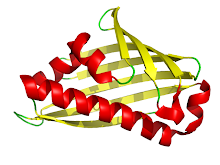
Once upon a time, I was taught about a magical process called glycolysis. I learned how this amazing process can, through a series of reactions, generate energy for life, and all of the fascinating steps along the way. I then wrote an exam on the subject, and promptly erased it from my memory.

A year later, once again I was taught about glycolysis, but this time alongside her slightly backward fraternal twin sister gluconeogenesis. Again, fascinating. Again, quickly forgotten. (image from Lehninger Principles of Biochemistry)

Still another year later came the fantastic experience that was BIOC 4230, Metabolic Processes. And guess who was there. That’s right, old friend glycolysis, with a few more tricks to show off. Learned. Exammed. Vigorously scrubbed from recollection.

One might have guessed she would come back into my life once again, and she has. I thought it was over. I thought I could move on.

But alas, the problem with a pathway being one of the first biochemical processes worked on is not just that it was the first one studied, but that in being so, it paved the way for many new studies to follow, and in many cases, techniques that are used in labs even today. This is similarly the case with the pioneering gene-regulation system lac operon, and bacterial/phage genetics prototype lambda phage system (I’m sure there are lots of other examples), both of which have become intimately integrated into routine techniques of molecular biology.

Glycolysis, the workhorse of biochemistry and dread of all intro biochem students, seems to have a pretty bad reputation. What I’ve come to appreciate is that not only does it provide an understanding of a central energy pathway in life; not only does it provide multiple examples for the study of biochemistry conveniently in one place, but remains useful to new applications to this day. It’s relative age, while making it seem like stuffy, boring science, means that most if not all kinks have been ironed out; essentially everything about the enzymes of glycolysis is known, at least from a technical standpoint.

This flies in the face of the oh-so-common undergraduate lament (that I, of course, never uttered) of:

“Why should I have to learn this if I am never going to use it? It is old science that no one needs to know anymore. I want a degree without having to learn anything!”

…or some less cynically distorted variation thereof. Well, case in point, readers. One student has found himself actually needing to know his basic biochemistry for his biochemistry work. This calls for a celebration!

But it will need to wait for a while. The fact that glycolysis and its enzymes are so well established means that if I’ve spent two weeks getting a reaction to work that continues to sit in a cuvette like so:

middle_finger-704928then I can’t blame glycolysis for stupid pyruvate kinase stupidly not carrying out the stupid reaction to give me a stupid signal and get some stupid data to get my stupid project off the ground. Stupid.

Monday, November 10, 2008

Why they call me crazy

Most people shudder when you say the term "Organic Chemistry". In fact, I just shouted it out loud in a communal study area, which resulted in cries of anguish, weeping, 3 attempts to jump out the nearest window, and one student setting himself on fire. When I tell people that I am taking extra upper-level courses in it "for fun" or, if it needs to be at least partly plausible, for the skill set I gain from the courses, many think me batshit insane. Well, maybe I am.

The weird thing is, for a subject so feared and despised by pre-medical and pre-pharma students, I actually sort of enjoy it. To me, organic chem is in many ways the closest you can get to playing with Lego, yet still earn advanced academic credit for it.

It's problem solving, as in:

I have this compound

And I need to make this one


Using the tools available to me, and some tricky maneuvers that chemists have invented to circumvent problems that biological systems often find when trying to synthesize compounds. If one can't figure it out, it can be downright maddening, but if one is willing to work at it, it can be incredibly rewarding to be able to come up with the right answer.

While I could be taking apiculture (beekeeping) or intro English as a bird course to round out my degree, organic chem is just more fun. I'm glad to have taken it. Perhaps I am nutso.

Whatever they tell you, I am NOT in this to learn to make designer drugs. I am NOT planning on moving to Columbia upon finishing my degree, and putting my skills to use, unhindered by regulatory agencies. And I am certainly NOT hoping to come up with a hallucinogenic dust that will induce irrational fear in citizens of Gotham city in order to take it over and establish my evil empire. Anyone who says otherwise is Batman.

Friday, October 17, 2008

Reality at the atomic level

Reviewing my Protein Structure course notes, I came again across the slide in which the professor writes "Reality is quantum, but classical approximations are convenient"

He made a very convincing case for why, a hundred years past the development of quantum theory, we still think of atoms as "balls on springs" when in reality, they are nothing like that. They are grains of sand held at the appropriate distance from each other, with a fuzzy cloud of mist in between that manages to hold it all together.

The things is, it's really hard to quantify just how fuzzy that cloud is, and so it becomes difficult to know how the system will behave when you want to do something to it. In addition, even our fastest computers just can't seem to manage the calculations beyond the simplest of systems, and so it's not just that we're too dumb to grasp it, the problem really is hard to calculate.

So we use the balls on springs, but we must not forget how we know the world actually works at that level, because certain phenomena just don't work if we only think of things in terms of classical approximations. I'm perfectly happy to leave it to the real chemists and physicists for now, but should I need to explain something I don't understand, I will be sure that the first thing I do is throw the Dalton model out the window, and remember to embrace the world of the fuzzy at the femto scale.

Tuesday, October 14, 2008

Memorization and the amino acids

A student of biochemistry, I've often heard the complaint "I have to learn all my amino acids again?"

The trick is not to forget them. And this extends beyond my little corner of the academic world to the periodic table, taxonomic groups, irregular verbs, and schools of philosophy. One must be able to speak the language of their subject so that others can understand them, and so that one can effectively communicate in their discipline. But good luck convincing those who don't want to bother learning.

As much as I dislike the procedure of memorization for school, as I believe that it does not really test your ability as a student, there are cases where it is just plain necessary. At those times if you are doing it right, you shouldn't be working on memorizing each thing, because they should come with an understanding of the process. Past scientists may not have been the smartest when it comes to nomenclature and systematics, lacking the hindsight that we now have, but usually there is still a reason for the names and that helps to know what we're talking about. For example, isoleucine is an isomer of leucine. Did not see that coming. Histidine is the protonable ring. Cysteine forms bridges, proline forms kinks, and glycine is flexible because it's smallest. Glutamine is the amide of glutamate, asparagine is the amide of aspartate. Sure, they're not easy to know but the things that make each one unique are what makes them memorable, and by learning this way, it is a lot easier than beating one's head off the wall trying to figure out how to draw arginine again from thin air memorizing how the N, C, and H's line up.

Like my professor said a few years back, "You need to decide which amino acid you are like. Are you large and negative, like glutamate, or are you small and polar like serine? Maybe you're extremely bulky like tryptophan."